How to Build a Flexible Pantry for Weeknight Cooking
Take stock before you shop, choose versatile staples that suit your routine, and use them to make weeknight meals without a rigid menu.
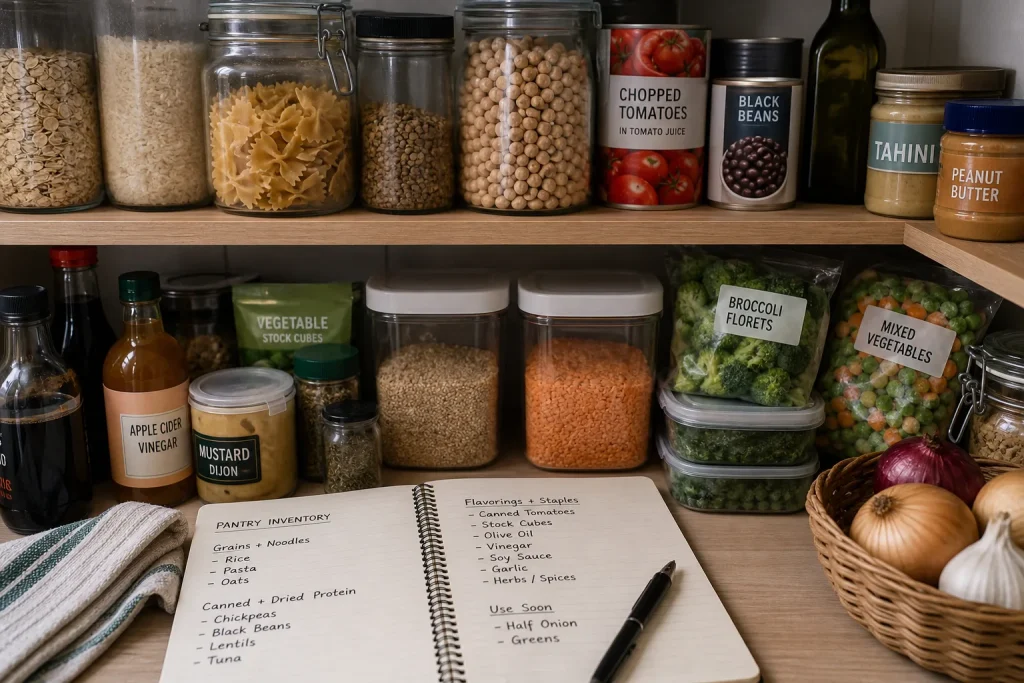
It is late, the fridge holds half an onion and a few tired greens, and dinner still needs a direction. A flexible pantry gives those odds and ends somewhere to go: beans can become soup or a skillet meal, while rice or pasta turns a small amount of vegetables into a more filling plate. Building one starts with what you already own, not a shopping list of ideal ingredients.
The aim is not to keep every staple on hand or follow a fixed meal plan. It is to stock a modest set of ingredients that work together in more than one way, suit the food you like to eat, and fit the space you have. Take stock, choose a useful core, fill gaps, and make the ingredients easy to use.
Take a clear inventory before shopping
Check the pantry, cupboards, freezer, and parts of the fridge where longer-lasting foods tend to collect. Put like items together so you can see what is available. Read labels for ingredients and storage instructions, and follow applicable food-safety guidance for handling, storage, and use. Discard food that is spoiled or otherwise unsuitable. A date label is not a universal safety test: do not rely on personal judgment alone for higher-risk foods or when storage conditions are uncertain. Follow the product label and local food-safety guidance, and contact a qualified food-safety professional or local health authority if you are unsure.
Write down what you have in simple groups: grains and noodles, canned or dried protein, cooking fats, flavorings, and vegetables or fruit that need using soon. Note amounts when they affect a decision. A nearly empty jar of peanut butter may still be enough for a sauce, while an unopened bag of lentils could support several meals.
- Check the front and back of shelves, including corners behind tall containers. If an item is hidden, move it where you can see and assess it; otherwise, leave it grouped with similar foods.
- Look for duplicates and compare their labels and condition. If both are suitable to keep, place the earlier-use item where you will reach it first; if one is damaged or unsuitable, set it aside for safe disposal.
- Inspect open packages and follow their storage directions. If contents show spoilage or were stored contrary to the label, discard them; otherwise, close the package securely or transfer it to a clean, dry, food-safe container.
- Include freezer staples such as frozen vegetables, bread, and cooked portions. If a frozen item is usable under its label directions, add it to your inventory; if you are unsure about its handling or condition, consult food-safety guidance rather than guessing.
- Make a short “use soon” note for fresh ingredients. If an item needs using and is suitable to eat, plan around it; if it appears spoiled, discard it instead of trying to rescue it in a meal.
- Check labels for allergens and storage instructions. If an ingredient conflicts with a household restriction, keep it out of the meal plan and choose a suitable alternative; otherwise, include it among the available options.
Then ask what you actually cook. If rice appears often, a different grain may be an occasional extra, not a core need. If you rarely make elaborate sauces, a shelf of specialty condiments will take up space without making dinner easier. Your inventory should reveal both what is missing and what you can stop buying for now.
Choose a small core that can change direction
A useful pantry has ingredients that pair with different vegetables, seasonings, and cooking methods. Choose across a few roles rather than collecting many versions of the same thing. You might keep a grain or starch, a protein source, a cooking fat, and a handful of flavor builders. Rice, pasta, oats, or potatoes can fill the starch role; beans, lentils, canned fish, or tofu can provide protein; olive oil or another familiar cooking oil can help with cooking.
Choose flavor builders to match meals you enjoy. Canned tomatoes can start a stew, pasta sauce, or shakshuka-style dish. Stock cubes or bouillon can add flavor to soup and grains. Vinegar, soy sauce, mustard, dried herbs, spices, garlic, and onions offer different paths, but you do not need all of them. Pick a few that combine naturally with your usual ingredients.
For every item you consider, name at least two plausible uses. Beans might go into a tomato stew or a salad; oats can serve as breakfast or thicken a savory mixture; coconut milk could enrich a curry or soup. If you can think of only one dish and do not make it often, leave the item off the core list unless it is a particular favorite.
Keep dietary needs and household preferences in view. A pantry that works for one person may not suit a household with allergies, different appetites, or varied schedules. Check ingredient labels for allergens, and keep restricted foods separate as appropriate. For specific nutritional or medical guidance, ask a qualified professional.
Match pantry choices to your real cooking routine
Consider how much time and attention you usually have on a weeknight. Dried beans require planning and cooking; canned beans are ready to rinse and add. A whole grain may suit a longer cooking window, while quick-cooking noodles can help when dinner needs little preparation. Choose according to the way you cook, not an imagined version of your routine.
Think about storage before buying. If you have one narrow cupboard, a few well-used ingredients in clear, labeled containers may be more useful than a broad assortment of bags and jars. Keep foods in their original packaging when it provides useful cooking directions or allergen information. If transferring food, use clean, dry, food-safe containers and preserve the product label or note the contents and relevant date.
Make a short core list in categories rather than tying it to exact recipes. A simple version might include one grain, one noodle or pasta, two protein options, canned tomatoes, a cooking oil, an acid such as vinegar, and a few seasonings you already like. Add frozen vegetables if freezer space permits. This is a starting point, not a rule: substitute foods that fit your culture, tastes, budget, and available storage.
Shop to fill gaps, not to restart the pantry
Before leaving for the store, compare your inventory with the core list. Mark each item as “enough,” “low,” or “missing,” then buy only what upcoming meals and storage space call for. Check the fridge and freezer again for vegetables, cooked leftovers, and proteins that should be used first. That second look helps prevent buying a pantry ingredient that does not solve the immediate dinner problem.
Favor ingredients that have more than one likely use and pair with foods already at home. If you have rice, canned beans, and frozen spinach, a can of tomatoes or a lemon may open up more combinations than another specialized sauce. Buy a quantity you can store and use. An unfamiliar spice or grain can be worth trying, but consider how it will fit into more than one meal before making it a regular purchase.
Keep the shopping list short and specific. “Something for protein” is easy to overbuy; “canned chickpeas for a skillet meal and lunch salad” gives the purchase a clear job. If a planned meal depends on fresh produce, leave room to choose what looks suitable at the shop rather than treating the pantry list as a complete menu.
Turn the ingredients into a flexible dinner formula
Use a simple formula to improvise: choose a base, add protein, add vegetables, and finish with flavor. A base might be rice, pasta, bread, or potatoes. Protein could be lentils, beans, eggs, tofu, fish, or another food that suits your household. Use fresh or frozen vegetables, then bring the components together with a sauce, seasoning, or splash of acid.
The formula is a prompt, not a requirement that every meal contain each part. Pasta with canned tomatoes and a little onion may be enough; rice with vegetables and an egg may work on another night. Taste as you go, and adjust with salt, pepper, vinegar, herbs, or a little more cooking liquid. Follow safe handling and cooking directions for foods that require them.
Keep a few reliable pairings in mind without making them the only choices: beans and tomatoes can become soup, a grain bowl, or a filling for toast; noodles, frozen vegetables, and soy sauce can make a quick stir-fry; lentils and stock can become soup or a thick sauce for grains. Adapt these combinations to the ingredients that need using.
Hypothetical worked example: use what is already open
Imagine, hypothetically, a household with a partly used bag of rice, a can of chickpeas, half an onion, frozen peas, canned tomatoes, and a small amount of curry powder. The constraint is a busy evening and no plan to shop. First, the cook checks the rice package directions and confirms the other ingredients are suitable to use under their labels and applicable food-safety guidance. They start the rice, soften the onion in cooking oil, stir in the curry powder, then add tomatoes and chickpeas. Frozen peas go in near the end so they warm through. The result is a saucy chickpea-and-pea dish served over rice. If the curry powder is not a favorite, the cook can instead season with herbs and black pepper, then add a little vinegar for brightness. That changes the flavor direction while using the same main ingredients; tasting and adjusting matter more than exact measurements.
Maintain the pantry with a brief reset
After cooking, return ingredients to their usual places and note anything that ran out or proved inconvenient. When restocking, move older usable packages forward and place new ones behind them. Keep a small list near the pantry or on your phone, adding an item when it is low or you have a clear reason to use it.
Repeat the inventory occasionally instead of buying from habit. Remove spoiled food, identify ingredients that have sat untouched, and revise the core list to reflect what you actually cook. A flexible pantry comes from useful choices and regular attention, not sheer quantity. Leave space for a fresh vegetable, a changing craving, and the occasional meal that does not follow a formula.
You might also enjoy

How Shared Household Customs Take Shape
Household traditions rarely begin with a grand plan. They grow from small, repeatable actions that people…
Why Some Everyday Objects Feel Easier to Use
A hypothetical kitchen drawer shows how visibility, clear feedback and comfortable handling can make an everyday…